

About SOLEAS
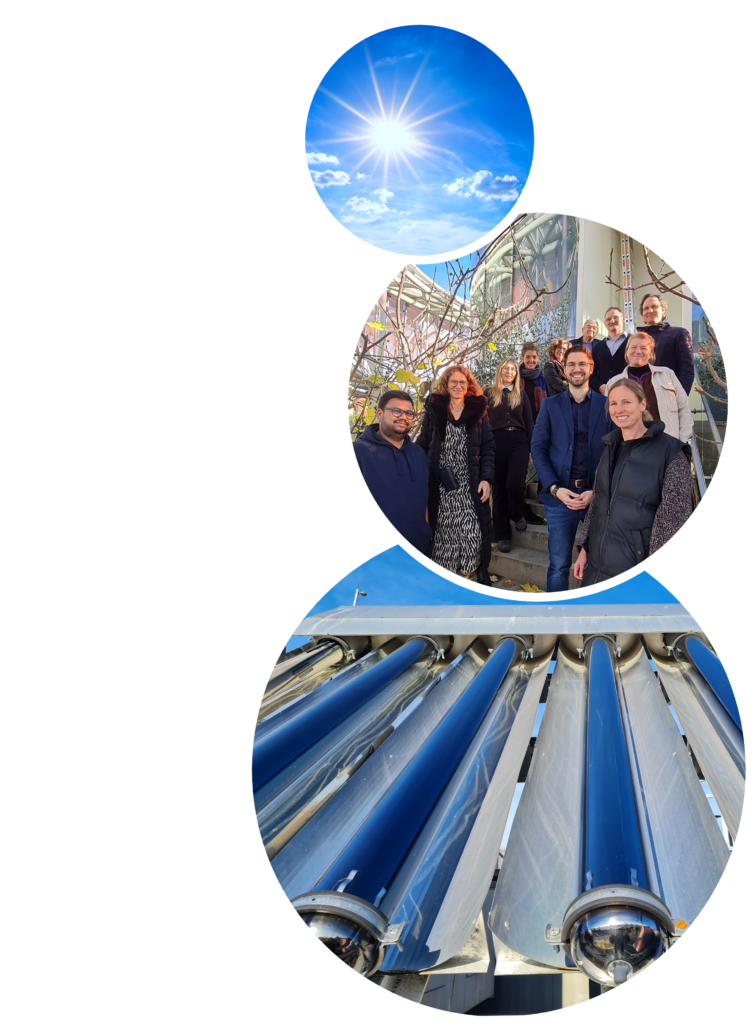
SOLEAS is a groundbreaking research initiative focused on developing innovative solar photoreactors that harness sunlight to produce sustainable energy and energy carriers for the production of materials. Our technology represents a significant step forward in renewable energy solutions, addressing the global challenge of sustainable chemical-energy production.
Through cutting-edge research and development, we are pioneering methods to convert solar energy directly into chemical energy stored in molecular bonds. This approach offers a clean, sustainable alternative to traditional fossil fuel-based ammonia and ethene production.
Our project brings together leading scientists and industry partners from across the EU, combining expertise in photochemistry, materials science, chemical engineering, and process technology.
Key Facts
Project Duration
2025 - 2029
Partner Countries
4 Countries
Staff
>15 Researcher

Funding
3.8 Million €
Participants

Green Tech Valley
Green Tech Valley Cluster acts as a networking and service platform and supports around 300 partner companies and research institutions in expanding their leading role in the field of energy and circular solutions. In this project the Green Tech Valley is responsible for investigating value chain aspects and developing a prosumer-oriented vision, and for the dissemination of the results.

AEE INTEC
IC2R
IC2R provides a photochemical process for coprocessing CO2 and H2O to afford ethene. At CRICsrl, researchers believe that CO2 and waste biomass are a resource rather than waste. Their work is focused on developing new strategies that can simultaneously reduce CO2 emissions, develop new sustainable processes, and generate profits from waste.
DLR – German Aerospace Center
Institute of Future Fuels

NANOSCI
NANOSCI is a Polish technology company developing advanced air purification solutions based on photocatalytic nanotechnology. We focus on sustainable, filter-free air purification and disinfection systems that can be used across industries and environments. Our offerings include both core photocatalytic materials and ready-to-use systems tailored to customer needs. Our core technology is photocatalysis — a process that uses ultraviolet (UV) light and a photocatalytic material to oxidize and decompose airborne pollutants.
Our team

I am delighted to communicate SOLEAS’s magnificent and groundbreaking visions to a wide audience.
Veronika Pranger
Green Tech Valley
Head of Communication

I appreciate the collaborative spirit of the SOLEAS team and the opportunity to work on innovative photoelectrochemical technologies. Working towards solutions that could support a greener future and create real impact is especially meaningful to me.
Emilia Gontarek-Castro
Nanosci
Scientist

Parth Shah
DLR Institute of Future Fuels
Researcher with focus on LCA
I’m delighted to contribute to the visionary SOLEAS project, supporting the development of a prosumer concept that integrates different stakeholder perspectives from the very start.
Elke Reuschenbach
DLR Institute of Future Fuels
Researcher with focus on social acceptance
News & upcoming events


Downloads & publications
Access our latest research publications, factsheets and presentations.
FAQ
Frequently asked questions
How does solar-to-chemicals conversion work?
We use the energy of the sun’s photons to activate a photoactive material and subsequently induce chemical reactions. In a Solar-to-X device we harvest solar energy, focus photons to the reaction sites and ultimately produce products, solely driven by energy from the sun.
What is a Solar-to-X Device?
A Solar-to-X device is the equipment to produce chemicals from low molecular substances only via the inputs of solar energy. This embraces the optical part to harness and direct solar light photons, the solar photoreactor and the essentially important photoactive material structures.
What are the new technical inventions of SOLEAS?
-
New photo(electro)catalysts: An innovative design will be developed, optimizing both the photoanode and photocathode—including their materials, composition, adhesion, durability, geometry, and surface area—to match the photoreactor’s design and requirements. Additionally, scale up the manufacturing processes for these electrodes to simplify and increase the efficiency of industrial-scale plants.
-
Innovative optical unit and solar receiving reactor: Design a novel optical unit which tunes incoming solar radiation (concentrator optics) towards specific wavelengths (wavelength modifier) for maximum energy harvesting and reaction efficiency and develop a solar receiving reactor (reactor tubes) which is flexible and scalable.
-
Single photosynthetic device under natural sunlight: Developing a single photosynthetic device where the reactor and the new development catalysts and materials with the optical unit are integrated and perform under artificial and natural sunlight conditions.
What are the objectives of the SOLEAS project?
- Community engagement and long-lasting value chain: Defining use cases and application scenarios where the SOLEAS device is integrated into a fully functional value chain from generation to end use.
- Design, produce, characterize, and test new photo(electro)catalysts: Optimizing both the photoanode and photocathode—including their materials, composition, adhesion, durability, geometry, and surface area—to match the photoreactor’s design and requirements. Additionally, scale up the manufacturing processes for these electrodes to simplify and increase the efficiency of industrial-scale plants.
- Design a novel reactor driven by solar energy, including an optimized optical unit which tunes incoming solar radiation (concentrator optics) towards specific wavelengths for maximum energy harvesting and reaction efficiency and develop a flexible and scalable reactor geometry, optimally aligning irradiation fields with flow behavior.
- Developing a single photoelectrochemical device where the reactor is integrated with the new developed catalysts and the optical unit. The developed device will reach TRL 5-6 at the end of the project.
- Perform a sustainability assessment of the developed technology considering its environmental, techno-economic, energetic and social potential impact.
- Maximize the impact of the project through wide dissemination, communication, contributions to portfolio management, exploitation, and standardization actions.
What is the vision of the SOLEAS project and development team?
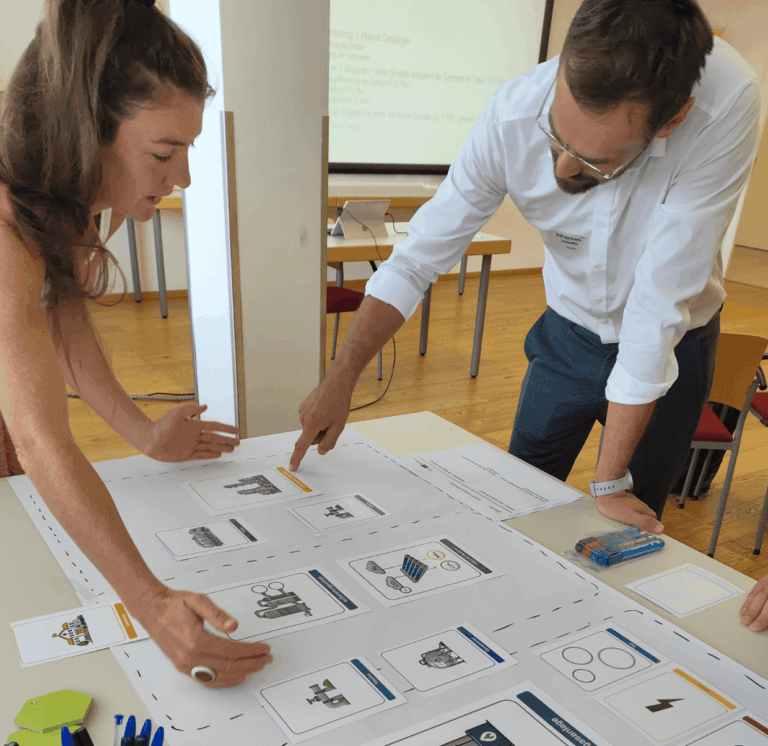
In the SOLEAS project, an interdisciplinary project team is developing a device that produces green and climate-neutral chemicals and energy carriers directly by solar energy. By using local biogenic CO₂ and N2 from air, and integrating the technology into existing value chains, SOLEAS empowers communities to act as prosumers, while aiming for a self-sustaining solution that creates long-term win-win benefits for both prosumers and the environment.
How does the SOLEAS Solar-to-X Device support the European Union’s climate goals?
-
Saves energy: Direct chemical conversion of the input materials in the reactor using sunlight saves energy compared to conversion steps/technologies that involve high losses.
-
CO2 storage: Used biogenic CO2, which would otherwise be emitted into the atmosphere, can be returned to the cycle.
-
Fewer emissions: Conventionally produced ethene, which is made from naphtha or akene through cracking in several process steps, emits approximately 2 t CO2 per ton of ethene. This could be avoided through sustainable ethylene production using the SOLEAS photoreactor.
-
No fossil fuels: Conventional ammonia production using the Haber-Bosch process requires large amounts of hydrogen, which is usually produced from fossil resources. The Haber-Bosch process emits around 1.9 t CO2 per ton of NH3. These emissions can also be avoided with ammonia from the photoreactor.
-
Decentralized production: Since ammonia is usually produced centrally, it has to be transported over long distances. Local production with the SOLEAS device shortens long transport routes.